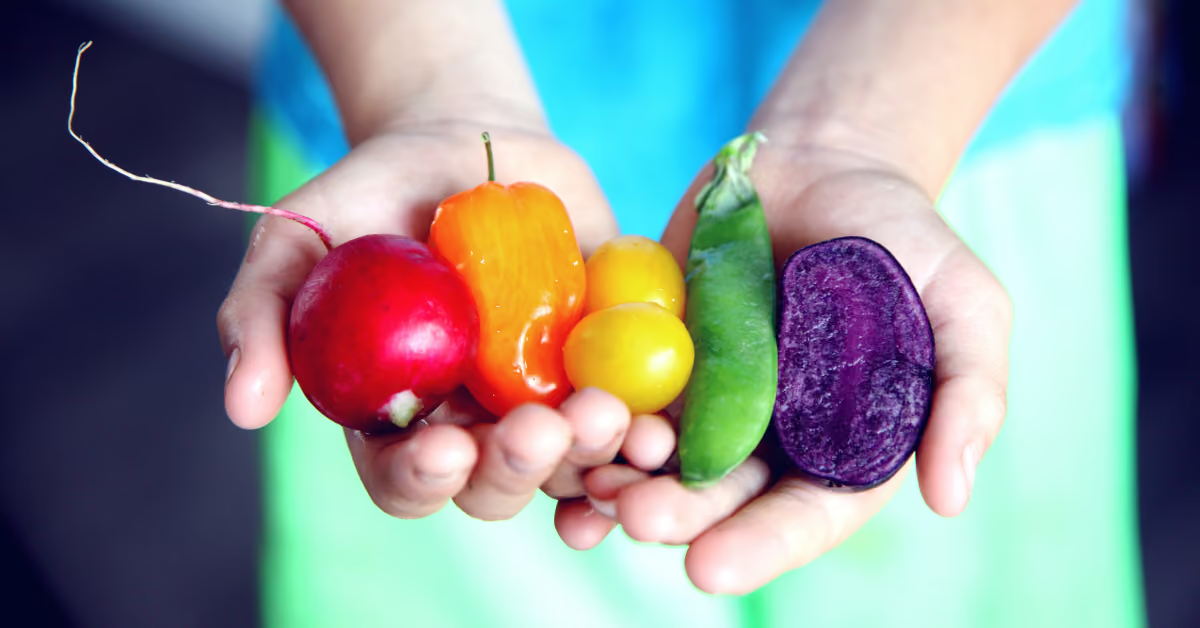
Our culture encourages us to compartmentalize everything, to divide life up into neat bits of time, color-coded and meticulously organized, even our date-nights and play-time with our kids. But no part of human existence and activity exists outside the bounds of divine concern, including what we put in our mouths. Eating is a moral act, so dioceses and Catholic institutions must pay attention to food. It must become as essential as catechesis, actually a part of catechesis. There are many reasons why, but here is the most fundamental reason: faith shapes life, the whole of life.
The best Biblical source that helps us reject the prevailing compartmentalized view that eating is just something we do, not a moral act that God cares about, is Leviticus. Leviticus talks of family life, economic exchange, marital relations, right worship and dietary practice: not just what we eat, but how we cultivate and care, harvest and slaughter, buy and sell at market, and prepare our food (and ourselves) for eating. The whole of human life and activity is seen in the light of God, including food. We don’t need a new book of Levitical dietary laws, but we do need to foster a Levitical outlook that says: God cares about what we eat; so should we.
We know that God (and the Church) cares about our economic transactions and until very recently a simple economics of food existed: we bought it from the person who grew it or raised it. Simplicity meant injustice was relatively easy to see and confront. Our current food system (infinitely more complex than the system of our grandparents) makes it easy to hide injustice and shift blame.
We need to vote with our forks and eat locally. There are simple ways we can do this individually and institutionally. The Church cannot be silent about food because she cannot be silent about injustice. So do what you can to proclaim the good news that we can live our faith and eat it too!
– Excerpt from Catholic Rural Life Magazine, Spring 2012
Editor’s Note: This article is a part of our “From the Archives” series. The series highlights articles, stories or news snippets from the CRL publication archives that are still relevant or thought provoking for us today.